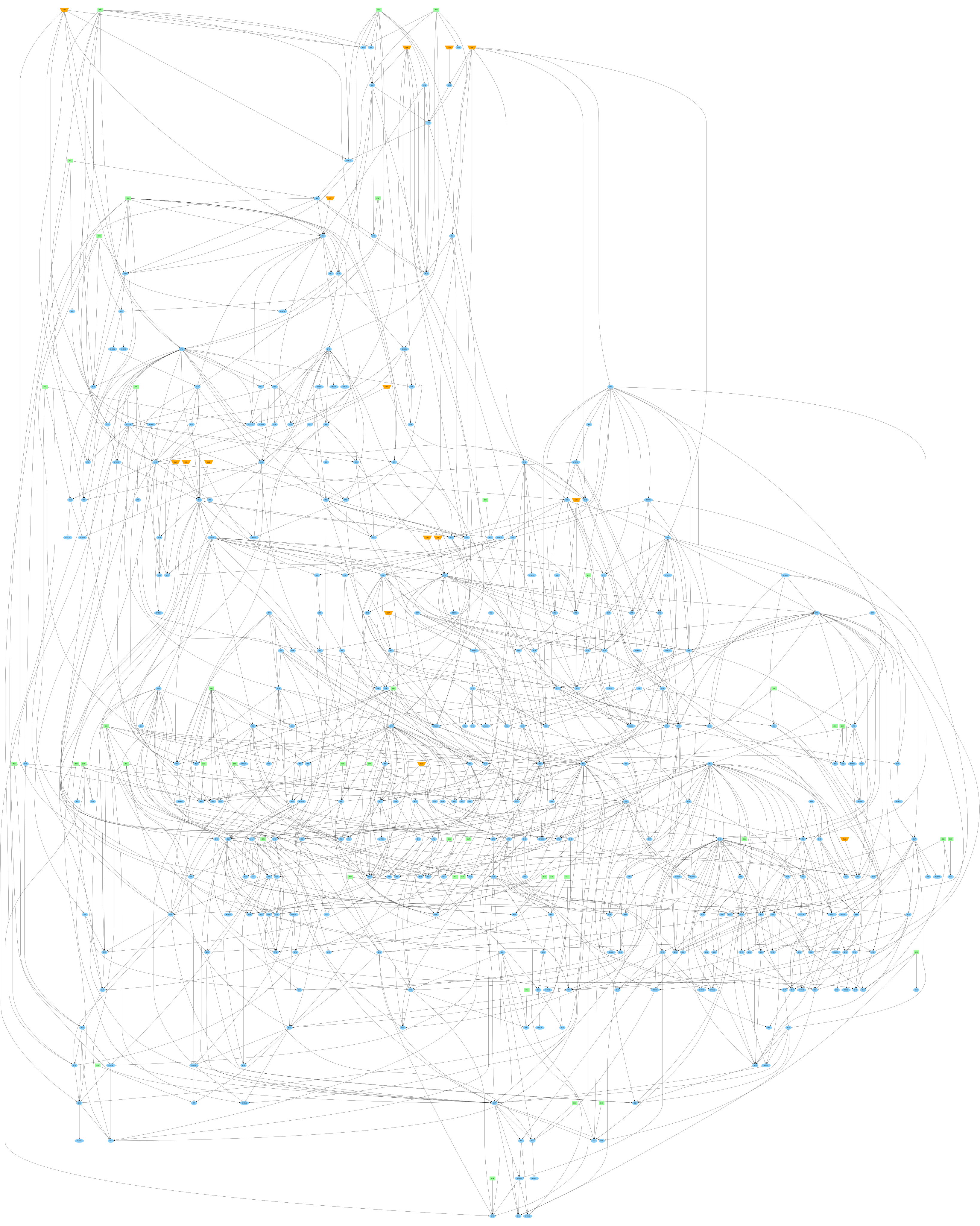
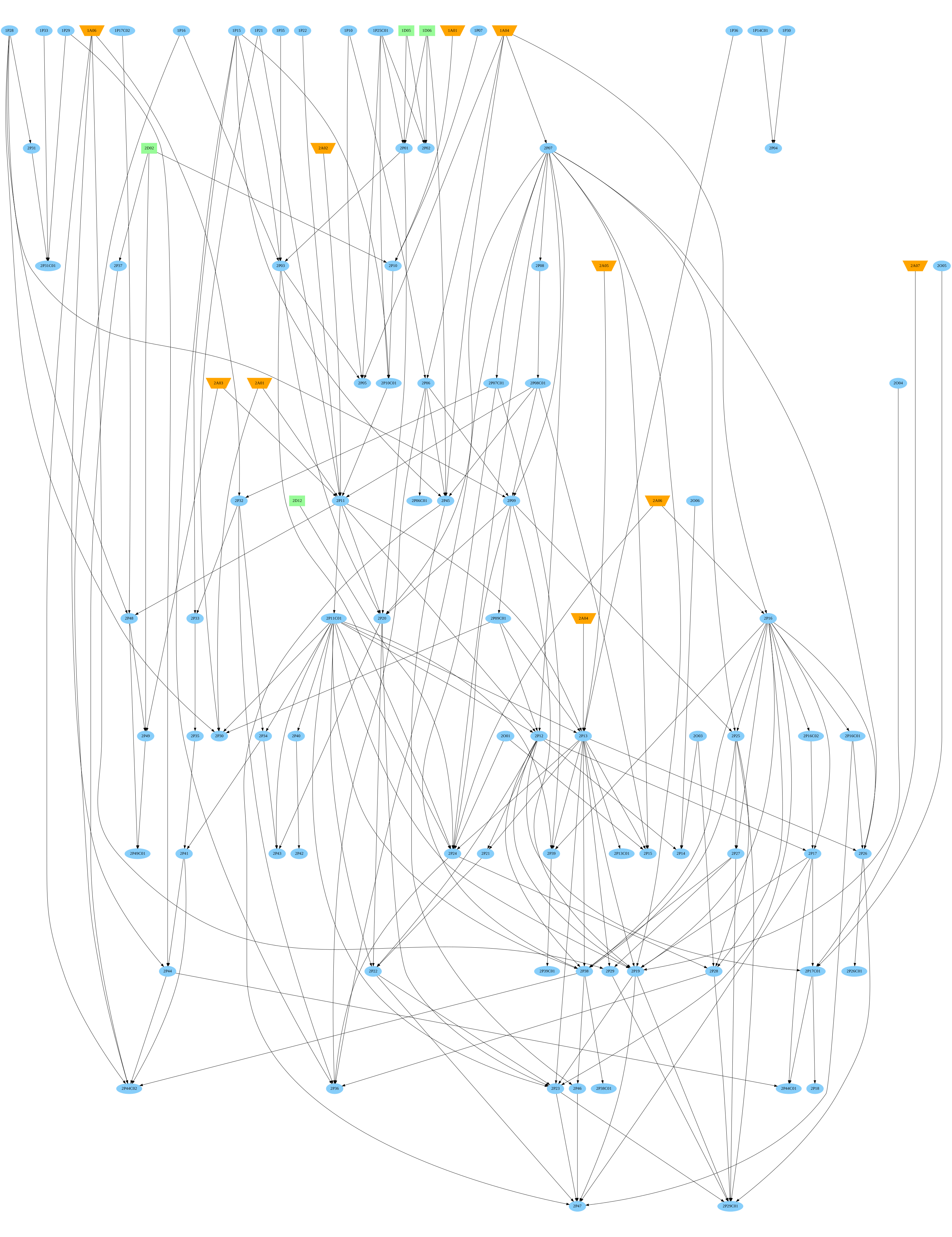
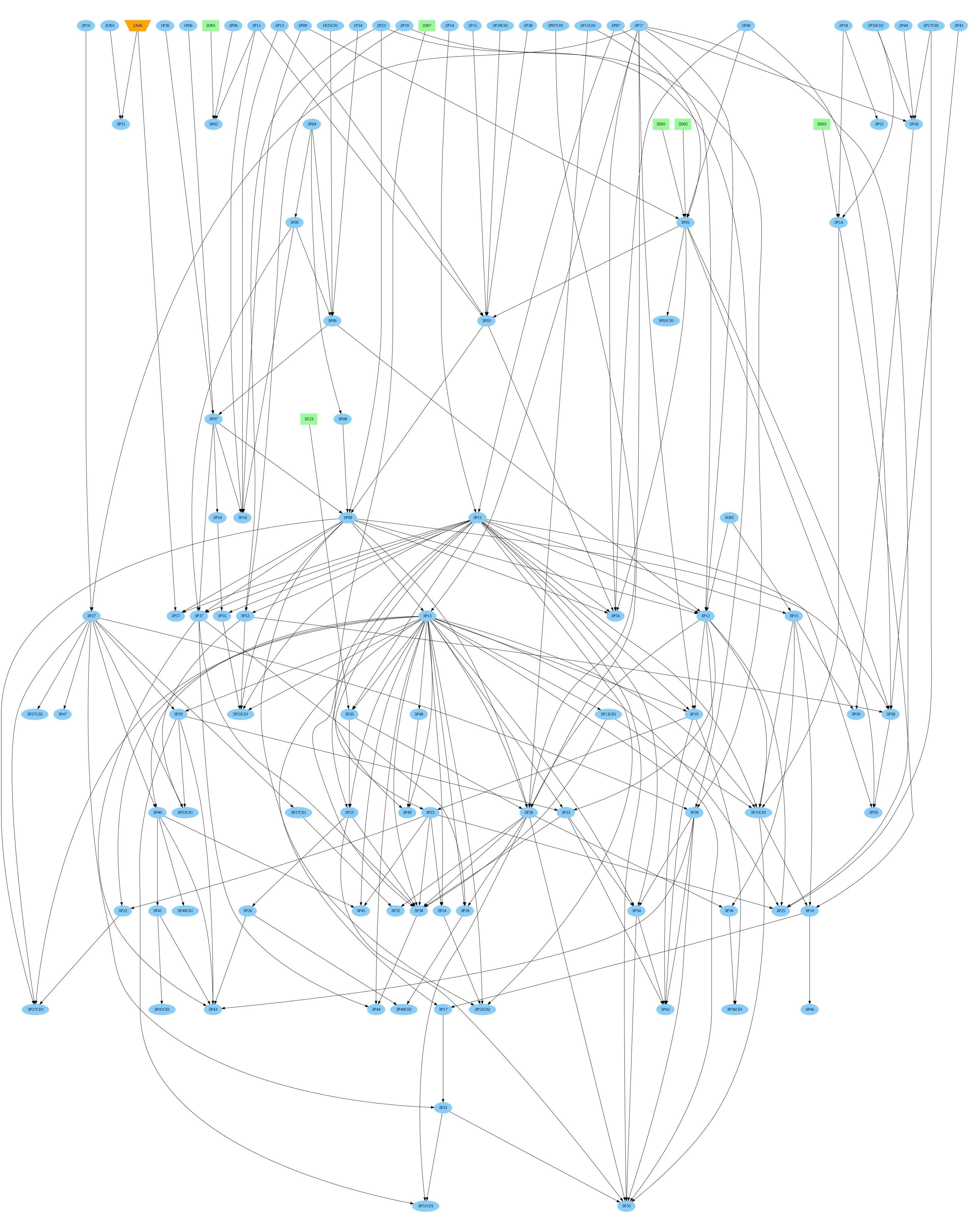
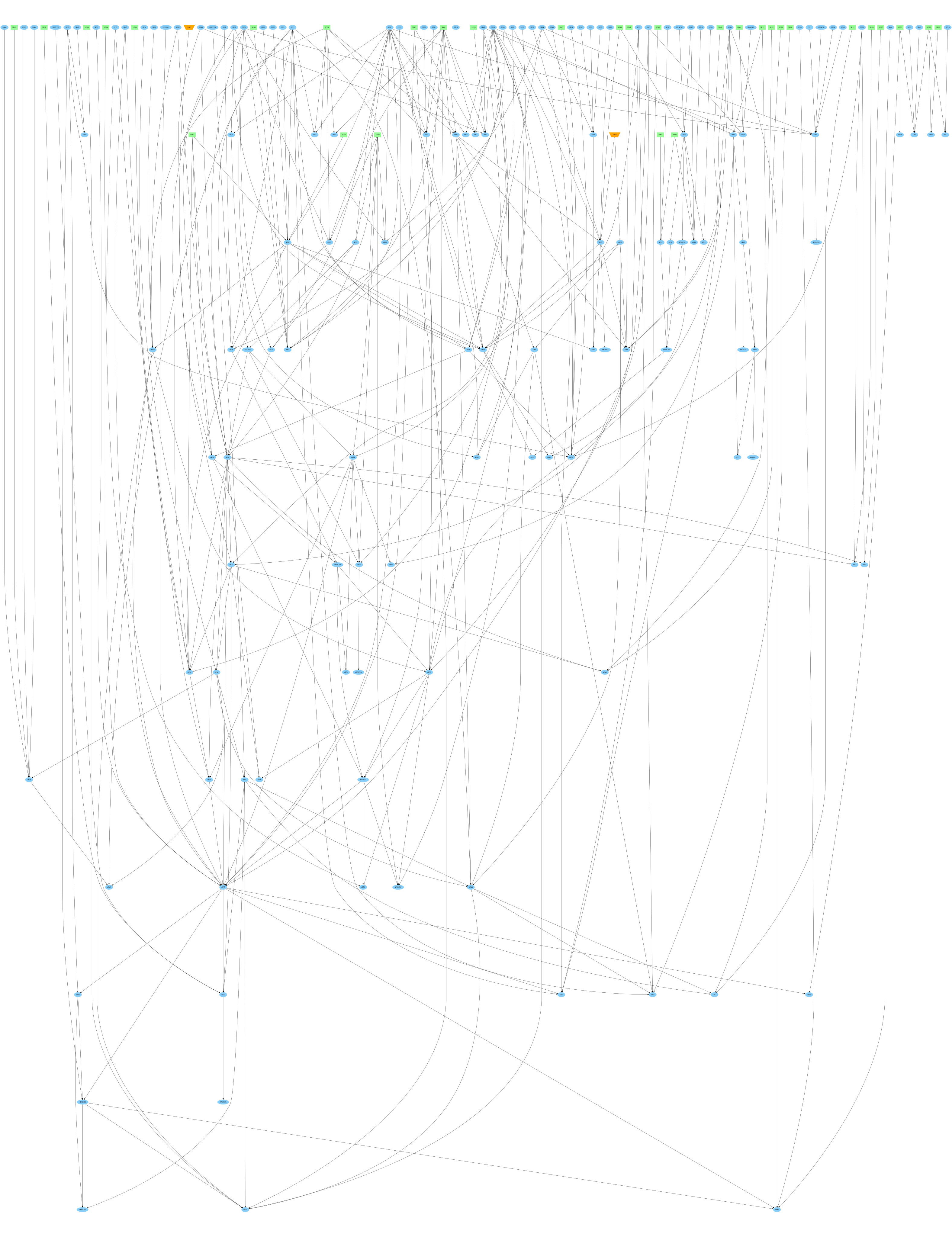
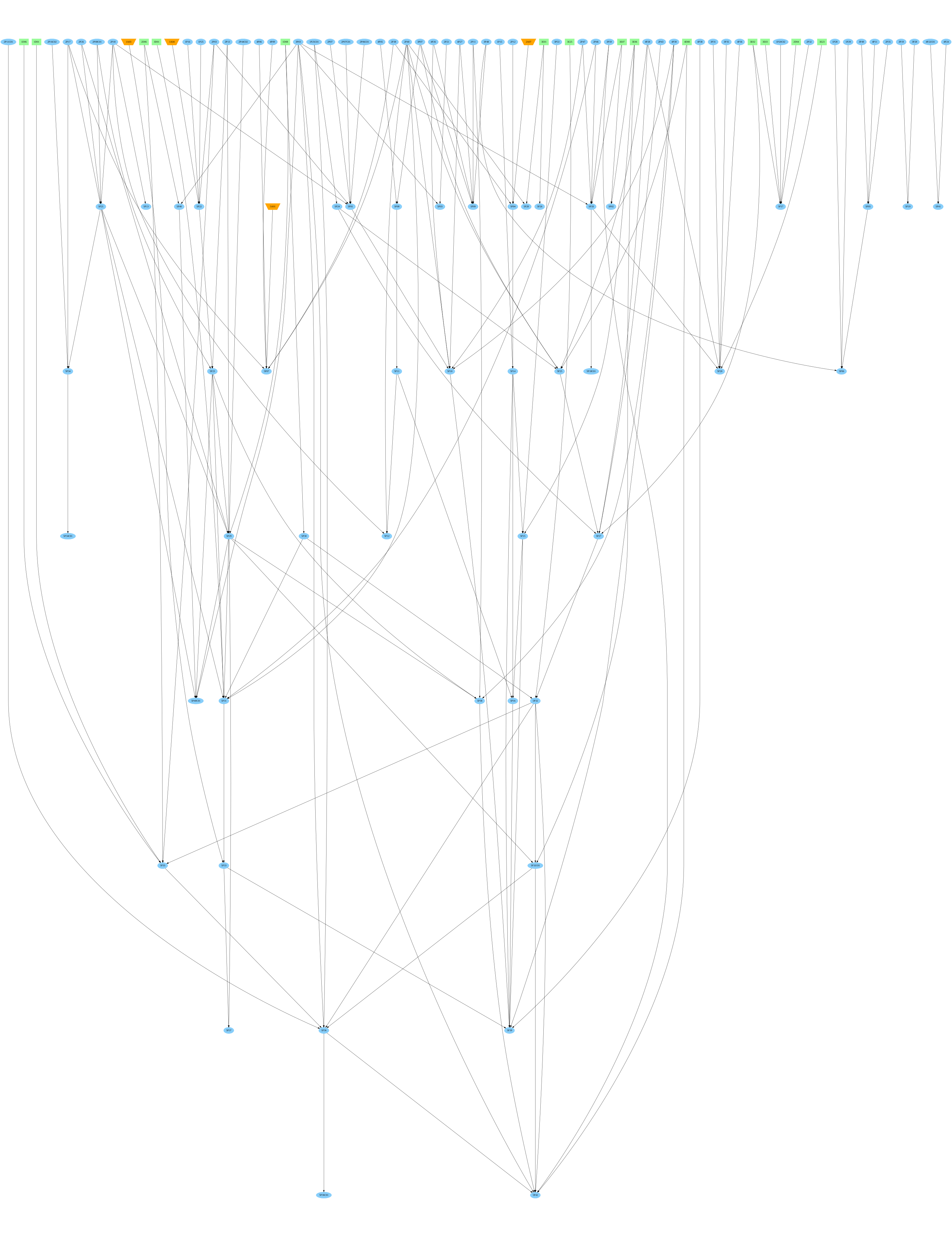
Say that the fecundity of a claim in a logically interconnected text, like Spinoza's Ethics, is the number of claims that logically depend on it. Using the Tredwell adjacency data, I sorted the claims in Spinoza's Ethics in order of decreasing fecundity. We can measure the fecundity in percentages: the percentage of the claims that depend on the given claim.
The result is here. (The explanations of what the items are are here, from Tredwell.) Fecundity is a measure of how fundamental a given claim is to the system.
The twelve most fecund claims, with their number of dependants, are:
- 1A04: 300 (77.3%)
- 1D03: 296 (76.3%)
- 1D04: 295 (76.0%)
- 1D05: 292 (75.3%)
- 1A06: 291 (75.0%)
- 1A01: 291 (75.0%)
- 1P01: 290 (74.7%)
- 1A05: 290 (74.7%)
- 1P04: 290 (74.7%)
- 1P02: 289 (74.5%)
- 1P03: 289 (74.5%)
- 1P05: 289 (74.5%)
The most fecund is Axiom 4, that the cognitio (understanding?) of the effect depends on the cognitio of the cause, which, through Spinoza's overreading of it (it sounds like a weak claim, and that's why we are tempted to agree, but in fact it is a strong claim), becomes the root of the epistemologically central 2 Proposition 7, which says that the order and connection of things is the order and connection of ideas. In fact, it is largely through this 2P07 that Axiom 4 gets its fecundity: 2P07 has a fecundity of 60%, and assumes nothing other than 1A04.
The most fecund derived claim is 1 Proposition 4, that distinct things must differ in attribute or mode.
Unsurprisingly, the ontological argument is central: the fecundity of 1 Proposition 11, that God exists, is 73%.
The most fecund claim from outside of Part 1 is the aforementioned 2 Proposition 7, whose centrality cannot be denied.
There are 103 propositions that have zero fecundity.
Axiom 2 of Part I has zero fecundity in the database I am using, as do 5A02 and 2A08. Due to the limitations of my method, axioms and definitions with zero fecundity don't appear in the results I linked to, though I may fix that eventually. The case of Axiom 2 of Part I interesting and surprising, since it basically states Spinoza's version of the Principle of Sufficient Reason. My feeling is that it is implicitly used all over the place.
The least fecund axiom that actually gets used is 5A01, about contrary actions, which has only one dependent. The next, somewhat more fecund axiom is 4A01, at 4% fecundity, which says that for any thing, there is a stronger thing which can destroy it.
Surprisingly to me, the least fecund axiom from Part 1 is 1A03, at 8%, which basically affirms that causation is deterministic. This may initially suggest that Spinoza's causal determinism is not as central to his thought as it is normally thought to be. But that might be too quick, because I suspect that much if not all of the deterministic import of 1A03 is found in 1A04, especially as interpreted by 2P07 and with the understanding the the logical connections between ideas are always entailment relations.