Thursday, January 28, 2016

God's surprisingness

God is very surprising. (a) Facts about God's nature are surprising. Who would have expected the being who is one and indivisible to also be a Trinity? (b) Facts about what God does are surprising. Who would have expected him to choose insignificant Israel, or... to die for us!?

Surprisingness isn't entailed by incomprehensibility. A text in a language I don't know can be utterly incomprehensible and utterly unsurprising. But on the other hand, insofar as God has surprises for us we do not comprehend him.

Surprisingness implies that not only are there facts about God that we can't figure out, but there are facts about God which our present evidence would lead us to deny--surprising facts. A focus on God's surprisingness may lead to a sceptical thought that we cannot expect to know anything about God. But that's not at all true. For mathematics is continually surprising, and yet is an area where we continue to know more and more. (And this is more than an analogy, since mathematics is a kind of branch of theology, if Augustine is right about mathematical objects existing in the mind of God.)

There some connection between God's holiness and God's surprisingness. God's surprises aren't just like particularly thoughtful birthday presents. They are the surprises of a mysterium tremendum. "Surprise" is thus too weak a word, yet it also correctly suggests a certain whimsy that is a part of God's nature if the whimsical surprises of mathematics and biology are a guide to the mind of God. Humor may be a form of theology, too.

The beauty of mathematical facts

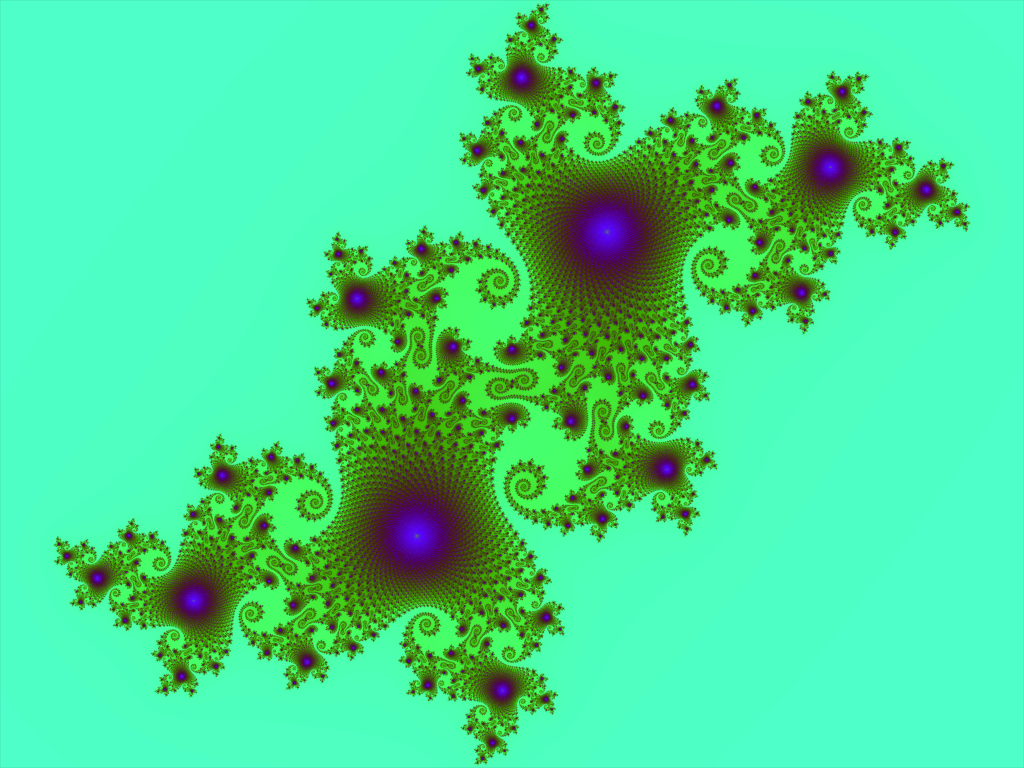
Some mathematical proofs are beautiful, for instance the classic proof of the infinitude of the primes (if there are only finitely many primes, multiply them together and add one; the result isn't divisible by any prime, but that's absurd). Some mathematical objects are beautiful, like certain fractals. But additionally, it is striking that some mathematical facts are beautiful. Often they are particularly surprising. The Euclid-Euler theorem states a lovely and surprising connection between Mersenne primes and even perfect numbers. It is very surprising that there are only five Platonic solids, and the fact that it is is beautiful.

Grammatically, though, there is something a little odd about a fact being beautiful. Facts don't seem to be the right sorts of things to be beautiful. It is rather the things that the facts are about that are beautiful. So perhaps it is the mathematical objects that make true the facts that are the real beauties?

But some lovely mathematical facts are facts that something doesn't exist, like a certain kind of decision procedure or a finite noncommutative division ring.

There is a nice theistic story here. The truthmaker of mathematical truths is God (say, God's mind or God's power). So the beauty of mathematical facts is more properly the beauty of God. Isn't it striking that a theistic account of mathematics can account for the ontology, epistemology and aesthetics of mathematics?

Wednesday, January 27, 2016

Pro tanto epistemic reasons and Bayesianism

I've been thinking about whether a Bayesian can make sense of the concept of pro tanto epistemic reasons. The idea is that p gives us a reason to believe q, though in the light of our full evidence it may no longer support q. In other words, the idea is that p is pro tanto evidence for q there is a reduced set of evidence relative to which p supports q.

But on a Bayesian picture it can't be just any reduced set of evidence, or else we have too many pro tanto reasons. Let p be the proposition that the sky looks blue and q be the proposition that the sky is red. Let r be some exceedingly unlikely fact, say the fact that when I asked random.org to generate a sequence of 16 random bytes, it generated 52 e2 57 4d 6d 16 c9 dd 12 9e b4 63 27 7e 86 53. Then I believe that (p&~r)→q, where the conditional is material. I believe it, because I believe the antecedent to be false. But if my background consists only of (p&~r)→q, then given reasonable priors p strongly supports q.

So what we want, I think, is to say that p is pro tanto evidence for q provided that there is a privileged reduced set of evidence relative to which p supports q. But what reduced sets of evidence are privileged? There is only one such set that stares one in the face: the empty set. So, the suggestion is: p is pro tanto evidence for q if and only if p supports q relative to an empty background, i.e., according to the absolute priors.

This, I think, offers a way to make some progress on the problem of priors. If we have independent sufficient conditions for something to be a pro tanto reason, then we have a constraint on our absolute priors, namely that if p is pro tanto evidence for q, then P(p & q) > P(p)P(q).

Could we have some such independent sufficient conditions for pro tanto reasons? I think so. For instance, around here, Trent Dougherty has been pushing phenomenal conservatism, which can be taken to be the view that seemings are pro tanto reasons for their contents. If the above Bayesian account of pro tanto reasons is correct, then this puts a constraint on prior probabilities, and that's a good thing.

Tuesday, January 26, 2016

A reflection on what cannot be spoken about

Conciliation and caution

I assign a credence 0.75 to p and I find out that you assign credence 0.72 to it, despite us both having the same evidence and epistemic prowess. According to conciliationism, I should lower my credence and you should raise yours.

Here's an interesting case. When I assigned 0.75 to p, I reasoned as follows: my evidence prima facie supported p to a high degree, say 0.90, but I know that I could have made a mistake in my evaluation of the evidence, so to be safe I lowered my credence to 0.75. You, being my peer and hence equally intellectually humble, proceeded similarly. You evaluated the evidence at 0.87 and then lowered the credence to 0.72 to be safe. Now when I learn that your credence is 0.72, I assume you were likewise being humbly cautious. So I assume you had some initial higher evaluation, but then lowered your evaluation to be on the safe side. But now that I know that both you and I evaluated the evidence significantly in favor of p, there is no justification for as much caution. As a result, I raise my credence. And maybe you proceed similarly. And if we're both advocates of the equal weight view, thinking that we should treat each others' credences on par, we will both raise our credence to the same value, say 0.80. As a result, you revise in the direction conciliationism tells you to (but further than most conciliationists would allow) and I revise in the opposite direction to what conciliationism says.

The case appears to be a counterexample to conciliationism. Now, one might argue that I was unfair to conciliationists. It's not uncommon in the literature to define conciliationism as simply the view that both need to change credence rather than the view that they must each change in the direction of the other's credence. And in my example, both change their credence. I think this reading of conciliationism isn't fair to the motivating intuitions or the etymology. Someone who, upon finding out about a disagreement, always changes her credence in the opposite direction of the other's credence is surely far from being a conciliatory person! Be that as it may, I suspect that counterexamples like the above can be tweaked. For instance, I might reasonably reason as follows:

You assign a smaller credence than I, though it's pretty close to mine. Maybe you started with an initial estimate close to but lower than mine and then lowered it by the same amount as I did out of caution. Since your initial estimate was lower than mine, I will lower mine a little. But since it was close, I don't need to be as cautious.
It seems easy to imagine a case like this where the two effects cancel out, and I'm left with the same credence I started with. The result is a counterexample to a conciliationism that merely says I shouldn't stay pat.

Defeaters and Bayesianism

  1. Bayesian reasoning is a type of defeasible reasoning.
  2. One can understand Bayesian reasoning without having the concept of a defeater.
  3. So, not all types of defeasible reasoning require the concept of a defeater to understand.

Monday, January 25, 2016

"Why are you telling me this?" and protocols

Suppose you want to convince me that I have no hands but are unable to lie (and I know for sure you are unable to lie). However, you know a lot more than I about something, perhaps something completely irrelevant to the question. For instance, suppose you know the results of some very long sequence of die rolls that's completely irrelevant. It seems you can fool me with the truth. For you can find some true proposition p about the die rolls such that I assign an exceedingly low probability to p. You then reveal to me this disjunctive fact: p is true or I have no hands. Then: P(no hands | p or no hands) = P(no hands) / (P(p) + P(~p and no hands)) ≥ P(no hands) / (P(p) + P(no hands)). (Exercise: check the details.) If P(p) is sufficiently small, relative to my prior probability P(no hands) (which of course is non-zero--there is a tiny chance that I was in a terrible accident and superb prostheses have just been developed), this will be close to 1.

But of course, whether I have hands or not, if you know a lot more about something than I do, you will be able to find a truth that I assign a tiny probability to. So I really shouldn't be deceived by you. Rather, I should take myself to have learned p. Your disjunction is equivalent to the material conditional that if I have hands, then p. I know I have hands. So, p. But what about the Bayesian calculation, which is mathematically correct?

This is a protocol problem. If I happened to ask you whether the disjunction "p is true or I have no hands" was true, and you then revealed it to me that it was, the Bayesian calculation would have been correct. But the actual protocol was that you picked out a truth that I took to be unlikely, and disjoined it with a claim that I have no hands. If I knew for sure that this was your protocol, I would have learned two things: first that p is true, and second that p is true or I have no hands. The second would have been uninformative in light of the first, and so there would be no deceit. But of course if the above were to really happen, I wouldn't know for sure what your protocol was.

In real life, when someone tells us something odd out of the blue, we often ask: "Why are you telling me this?" The above case shows how epistemically important the answer to this question can be. If you tell me (remember that you are unable to lie) that you're telling me this to get me to think I have no hands, I will suspect that your protocol may be to find an unlikely truth and disjoin it with the claim that I have no hands. As long as I have significant suspicion that this is your protocol, your statement won't shake my near-certainty that I have hands. But if you tell me that you were telling me this because you decided, before finding out whether p was true, that you were going to tell me whether or not the disjunction is true, then my near-certainty that I have hands should be shaken. I wonder how often "Why are you telling me this?" involves a case of trying to find the protocol and thus to figure out how to update. Rarely? Often?

Friday, January 22, 2016

Absence of evidence is evidence of absence

It's a well-known theorem that if conditioning on A increases the probability of B, then conditioning on not-A increases the probability of not-B. So if learning that there is evidence of B increases the probability of B, learning that there is no evidence for B increases the probability of not-B. Hence, there is a sense in which absence of evidence is evidence of absence.

Of course, the absence of evidence may be exceedingly weak evidence of absence, and that's probably the right way to take the platitude that absence of evidence isn't evidence of absence.

Thursday, January 21, 2016

Pantheism and denial of divine simplicity

Pantheism presents this metaphysical picture of the world: The world consists of two kinds of things, namely God and his proper parts. Theists who deny divine simplicity then seem to be committed to the claim that while pantheism is actually false, its metaphysical picture is possibly false. For if God isn't simple, then had God not created anything, the world would have consisted of two kinds of things: God and his proper parts.

Might the damned design their hell?

In my Death and Afterlife class, we were reading about whether immortality is worth having. The following has become clear to me: it is not easy to design an eternal life that isn't in some way hellish. An eternal life of fixed capabilities would involve the boredom of infinite repetition, and we could easily get bored with a life of growing capabilities, too, as things become too easy. To have a good infinite life, a human being needs something utterly exceeding our ordinary life--like the beatific union with an infinite God--or a very carefully fine-tuned life, say a life where our capabilities grow without bounds but the problems set for these capabilities grow in such a way as to neither be too frustrating or too easy.

This makes plausible the model of hell on which the life of the damned is just a life they designed for themselves. For the damned would be designing a life apart from God, and yet being wicked would not be able to wisely fine-tune such a life.

But I don't think we should embrace without restriction the model on which the damned design their eternal life. For some clever but still wicked people could design an eternal life of infinite recurrence and great sensory pleasure, with amnesia between the recurrences. Such a life, while nightmarish from the perspective of an outsider who knows that all the pleasures are a cycle of repetition and forgetting, could be blissful from the inside. Likewise, a wicked person could design an eternal life at the level of a contented pig. Again, to the outsider it would be nightmarish, but from the inside the wallowing would be delightful. However, I think the biblical picture of hell makes hell not only miserable from the outside but also from the inside.

Perhaps we should have this model of hell: The damned design their own eternal life subject to the constraint that there is no longer room for self-deceit, forgetting, drunken stupor or the like. On this model, God imposes suffering on the damned, but he does it by means of bestowing three good things: (a) ensuring the damned are no longer capable of self-deceit, deadening of the intellect or the like; (b) giving the damned autonomy over their own infinite lives; and (c) ensuring that the life does not end. In fact, God could simply bestow these three good things on damned and blessed alike.

Wednesday, January 20, 2016

A new solution to the non-identity problem?

Molly Gardner in a piece that just came out offers an interesting new solution to the non-identity problem, the problem of making sense of benefits and harms to people who wouldn't exist were it not for our actions of benefiting or harming. Gardner's suggestion is:

A state of affairs, A, is a benefit for an individual, S, just in case if it were true that both S existed and A did not obtain, then S would be worse off in some respect.
This is a clever solution: normally when evaluating whether an action benefits or harms someone, we simply ask how they would have done had we not done the action; but Gardner wants us further to keep fixed that the patient exists.

But clever as it is, it looks to me that it fails. First, suppose that a strong essentiality of origins thesis obtains. Then whenever we benefit or harm a future person, that person couldn't exist without our action. But that means that Gardner's conditional becomes a per impossibile conditional. And concepts of ethical importance should not be defined in terms of something as poorly understood and as controversial as counterpossible conditionals.

Suppose now that there is no strong essentiality of origins thesis. Then, plausibly, a person who was conceived through coitus could also have been conceived through IVF, at least if the same sperm and egg were involved. Now suppose that where the couple lives, IVF technology is highly experimental and works so poorly that children conceived through IVF end up having all sorts of nasty health problems. The couple is wicked and doesn't care about the health of their children, but they also haven't even heard of IVF, and so they conceive Sally the natural way. Now let's consider Gardner's conditional. What would have happened had the child existed and the couple not engaged in coitus? Well, the closest possible worlds where Sally exists and the couple did not have intercourse are worlds where the couple engaged in a poorly-functioning IVF treatment, and hence worlds where Sally has nasty health problems. So the couple benefited Sally by engaging in coitus.

The conclusion that the couple benefited Sally by coitus is, I think, true. For I believe it is always good to exist. But it is clear that Gardner doesn't want to suppose that existence is always a good. And if existence is not always a good, then we can suppose a scenario like this: Sally is going to have an on-balance bad life if she is conceived by coitus, and an on-balance worse life if she is conceived by IVF. By Gardner's criterion, the couple has benefited Sally through coitus, even though Sally's life is on-balance bad. This is surely mistaken. One might say that the couple benefited Sally by engaging in coitus rather than IVF. But since they never even considered IVF, one can't conclude that they benefited Sally simpliciter. (If Sam gives Jim a mild electric shock, he harms Jim simpliciter, but he benefits Jim by giving him a mild rather than severe shock.)

And even if we grant--as in the end we should--that existence is always good, Gardner's conditional gives us the wrong reason for thinking that the couple benefited Sally. For the benefit to Sally has nothing to do with the fact that Sally would have been worse off in the nearby worlds where she existed through IVF.

And even if essentiality of origins is true, the argument concerning Sally works. For it is still true that, per impossibile, had Sally existed but without her parents having intercourse, she would have existed through IVF and hence had very poor health.

The problem with Gardner's approach is this: the worlds that are relevant to the evaluation of her counterfactual may simply be irrelevant to the question of benefit or harm simpliciter.

Essentiality of origins and the non-identity problem

I assume that a strong essentiality of origins thesis holds, so that for any action we could take but did not take, had we taken the action, none of the individuals who will in fact come into existence would come into existence. For the causal history of every individual coming into being in our future (i.e., in our future light-cone) includes the (often extremely minor) gravitational and other influences coming from our actions. Thus, any benefit or harm we do to future individuals is a benefit or harm we do to individuals who wouldn't have existed had we not done them that benefit or harm. This means that the non-identity problem--the problem of benefits and harms to individuals who wouldn't exist had they not been thus benefited or harmed--is always there when we consider benefits and harms to individuals who do not yet exist. The non-identity problem isn't just a special problem that arises in cases where people's reproductive decisions are caused by our actions (say, as when a couple procreates because the parents of one of them have established a generous trust fund for all future grandchildren), but it arises in regard to future individuals in everything we do.

Monday, January 18, 2016

We are not alone among language users

This argument is valid:

  1. All semantic truths are knowable to members of the community of language users.
  2. There are semantic truths that are not knowable to human language users.
  3. Therefore, there is at least one non-human language user.
There is some reason to accept (1) in light of the conventionality of language. Premise (2) is going to be quite controversial. I justify it by means of a standard argument for epistemicism. Consider Queen Elizabeth II. There are 88 statements of the form:
  • Elizabeth was not old at age n but she was old at age n+1
where n ranges from 1 to 88. It's a straightforward matter of classical logic to show that if all 88 statements are false, then:
  1. Elizabeth was old at age 1 or Elizabeth is not old at age 89.
But (4) is clearly false: Her Majesty is old now at age 89, and she surely wasn't old at age one. So, at least one of the 88 statements is false. This means that there is a sharp transition from being not old to being old. But it is clear that no matter what we find out about our behavior, biology and other relevant things, we can't know exactly where that transition lies. It seems very plausible that the relevant unknowable fact about the transition is a semantic fact. Hence, (2) is true.

The most plausible candidate for the non-human language user who is capable of knowing such semantic facts is God. God could institute the fundamental semantic facts of human language and thereby know them.

Friday, January 15, 2016

Procreation and love

Start with this consequence of the essentiality of origins:

  1. The identity of an individual depends on the exact time of her coming-into-existence.
(It's very plausible that it depends on coarse-grained time of coming-into-existence: I couldn't have come into existence a hundred years earlier. But there is also a well-known argument from that for the claim that it depends on the exact time.) Now, it seems that no action people can take prior to the origination of an individual determines the exact time of her coming-into-existence. There isn't any true counterfactual of the form of the form: "If we were to do A, then an individual would come into existence exactly at t." In fact, for any action we can take, quantum indeterminism will ensure a cluster of infinitely (if time is continuous) many or at least very many close-together possible resulting conception times. Moreover, each exact time will have a very tiny, perhaps infinitesimal or zero, probability of being the actual time of origination. Hence it seems:
  1. There is no true probabilistic counterfactual of the form: "If we were to do A, then an individual would be not unlikely to come into existence exactly at t."
(Molinists will, of course, disagree. But Molinism is false, I take it.) Thus:
  1. People cannot procreate out of love for the particular individual who would likely come into existence from the procreation.
For there is no particular individual such that she would likely come into existence from the procreation.

Now, notice that God in creating an individual--either ex nihilo or in cooperating with the joining of an egg and sperm--is under no such constraints. Thus it is possible for God to act in such a way that were he to act so, an individual would come into existence at a precise time. And the same is true for other features of the origination of the individual besides the time of its occurrence. So God could create out of love for the particular individual who would come into existence from the creation.

This fact suggests a weakness in premise (2) of my above argument. It could be that God has already decided what individual would result if a couple chose to procreate, and has resolved in particular that sperm and egg would meet at a particular time, as long as the couple chooses the procreate. God, thus, is resolved to control all the quantum phenomena to ensure a particular circumstance of origination. Thus it's up to the couple whether someone comes into existence, but there is a particular someone who would exist if the couple procreated. It would not be surprising if this were to happen in special cases, and it would be possible for it to happen in all cases. I don't know if it does, though.

The upshot of the above argument, thus, is that unless special theological assumptions hold, it is not possible for a couple to decide whether to procreate out of love for the particular child that would result.

Thursday, January 14, 2016

All's well that ends well?

If I were informed that last night I had suffered a horrible pain, all memory and other traces of it having been erased, I would be scared that this might happen again, but the unremembered pain would be almost as nothing to me. All's well that ends well. On the other hand, if I learned that one of my children had suffered a horrible pain last night, though all memory and other traces of it were erased, I would not only be scared that this might happen again, but I would feel very sorry for the child for having felt that pain. I would be glad it ended well, but the ending wouldn't be all.

It's as if I were a presentist about myself and an eternalist about others. This is some evidence for eternalism, I think. For it is likely that moral attitudes towards self are a special case, to be taken care of by indexical-type considerations, while it is moral attitudes towards others that are a better guide to the objective order of the world.