Here is one way to generate a great chain of agency: y is a greater agent than x if for every major type of good that x pursues, y pursues it, too, but not vice versa.
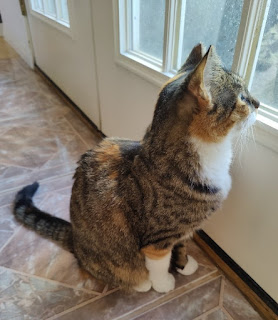
Take for instance the cat and the human. The cat pursues major types of good such as nutrition, reproduction, play, comfort, health, life, truth, and (to a limited degree) social interaction. The human pursues all of these, but additionally pursues virtue, beauty, and union with God. Thus the human is a greater agent than the cat.
Is it the case that humans are at the top of the great chain of agency on earth?
This is a difficult question to answer for at least two reasons. The first reason is that it is difficult to identify the relevant level of generality in my weaselly phrase “major type of good”. The oak pursues photosynthetic nutrition, the dung beetle does its thing, while we pursue other forms of nutrition. Do the three count as pursuing different “major types” of good? I want to say that all these are one major type of good, but I don’t know how to characterize it. Maybe we can say something like this: Good itself is not a genus but there are highest genera of good, and by “major type” we mean these highest genera. (I am not completely sure that all the examples in my second paragraph are of highest genera.)
The second reason the question is difficult is this. The cat is unable to grasp virtue as a type of good. A cat who had a bit more scientific skill might be able to see an instrumental value in the human virtue—could see the ways that it helps members of communities gain cat-intelligible goods like nutrition, reproduction, health, life, etc. But the cat wouldn’t see the distinctive way virtue in itself is good. Indeed, it is not clear that the cat would be able to figure out that virtue is itself a major type of good, no matter how much scientific skill the cat had. Similarly, it is very plausible that there are major types of good that are beyond human knowledge. If we saw beings pursuing those types of good, we would likely notice various instrumental benefits of the pursuit—for the pursuit of various kinds of good seems interwoven in the kinds of evolved beings we find on earth (pursuing one good often helps with getting others)—but we just wouldn’t see the behavior as the pursuit of a major type of good. Like the cat scientist observing our pursuit of virtue, we would reduce the good being pursued to the goods intelligible to us.
Thus, if octopi pursue goods beyond our ken, we wouldn’t know it unless we could talk to octopi and they told us that what they were pursuing in some behavior was a major type of good other than the ones we grasp—though of course, we would still be unable to grasp what was good in it. And as it happens the only beings on earth we can talk to are humans.
All that said, it still seems a reasonable hypothesis that any major type of good that is pursued by non-human organisms on earth are pursued by us.